



On Site Renewable Heat – Seasonal Heat Storage
Interseasonal Heat Transfer is a new form of on site renewable energy that integrates solar thermal collection in summer with heat storage in ThermalBanks to double the efficiency and Coefficient of Performance of ground source heat pumps in winter.
Interseasonal Heat Transfer captures surplus heat from summer sunshine, stores it in ThermalBanks™ in the ground and releases it to heat buildings in winter.
Interseasonal Heat Transfer also captures cold on winter nights, stores this in ThermalBanks™ in the ground and releases it to cool buildings in summer.
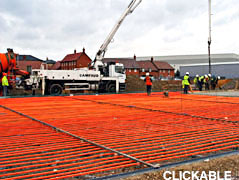
An IHT system includes an Asphalt Solar Collector, a ThermalBank to store heat energy, and an ICAX Skid which incorporates a heat pump and an ICAX Black Box electronic control system.
IHT™ saves over 50% of carbon emissions compared to using a gas boiler for heating.
IHT™ saves over 80% of carbon emissions compared to using standard air conditioning and chillers for cooling.
IHT™ saves over 100% of the annual cost of running your heating system if you are entitled to claim the Renewable Heat Incentive.
Click to understand how IHT worksto achieve new levels of energy efficiency in buildings by providing Sustainable Heating Systems for intelligent buildings.
Planning and Renewable Energy
The Merton Rule requires new developments to demonstrate at least 10% of on site renewable energy before planning permission is granted. Interseasonal Heat Transfer can now be used to generate over 40% of on site renewable energy and make large savings in annual running costs of both heating and cooling.
Alternative Energy – Seasonal Heat Transfer
At last there is an alternative to the standard renewable energy options that have been available for some years. Seasonal Heat Storage integrates the strengths of solar thermal collection in summer with seasonal thermal storage in ThermalBanks – in order to deliver heat through heat pumps more efficiently in winter.
Low Carbon Economy
Nearly half the energy consumed in the UK is used in buildings – mostly for heating, cooling, lighting. Interseasonal Heat Transfer is able to offer a significant reduction in consumption of fossil fuels for heating and cooling in the move to a low carbon economy – by saving surplus energy in summer and returning it in winter.
Sustainable Heating Systems powered by solar energy
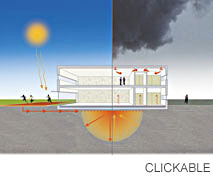
ICAX delivers Sustainable Heating Systems powered by solar energy. ICAX ensures that the systems delivered are in balance over the year as a whole by using detailed thermal modelling to balance the heating loads of a building with the cooling loads. Where the heating load is larger than the cooling load ICAX uses asphalt solar collectors to collect heat in summer in advance of the heating season. Where the cooling loads are larger than the heating loads ICAX uses an asphalt heat rejector to dissipate the excess heat and balance the system.
IHT is a dynamic system that adapts to the changing temperature loads as the building use changes, weather patterns change or global warming shifts the balance of requirement for the building.
Ground Source Heating and Cooling – GSHC
ICAX uses an integrated combination of solar collection, seasonal thermal storage and ground source heating and cooling to provide Interseasonal Heat Transfer – economic renewable energy.
See Professor David MacKay on Sustainable Energy – without the hot air.
See Ground Source Energy | Heat Pumps | Clean Energy Cashback
