
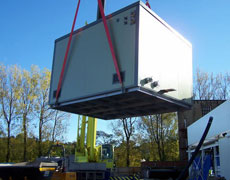
Heating and cooling loads in Supermarkets
Supermarkets need careful control of internal temperatures. They need to balance lower temperatures to preserve the food on their shelves, and in chiller cabinets, with the comfort needs of their customers. They need to balance the need for comfort heating in winter and the need for comfort cooling in summer.
Most supermarkets are open for long hours, nearly everyday of the year. Many supermarkets have a larger annual cooling load in the spring, summer and autumn months than the heating load needed over the winter. Interseasonal Heat Transfer can address these needs efficiently and economically by balancing the needs for heating and cooling within the building, and between seasons by using a Thermalbank to store heat recovered from the building in summer until it can be recycled for heating purposes in winter.
Interseasonal Heat Transfer™ for supermarkets ...
- provides reliable, low-cost on site Renewable Heat for space heating by re-cycling solar energy
- saves over 70% of carbon emissions compared to using a gas boiler for heating
- provides reliable, low-cost, on site Renewable Cooling by re-cycling winter cold
- saves over 80% of carbon emissions compared to using standard air conditioning for cooling
- provides low-cost heat source for retailers by using ThermalBanks as thermal stores
- allows supermarkets to recycle their heat energy from summer to winter
- reduces emissions by using re-cycled solar energy instead of burning fossil fuels
- prolongs the life of solar thermal panels by saving the heat in ThermalBanks instead of allowing them to overheat in summer
- attracts Renewable Heat Incentive cashback for use of ground source heat pumps
- attracts Renewable Heat Incentive cashback for use of solar thermal collectors
- answers the planning permission requirements for on-site renewable energy with invisible technology
Interseasonal Heat Transfer™ provides green energy to green grocers ...
The combined benefits make IHT an attractive renewable energy choice for retail stores, including food retail, aiming for low energy use or aiming to meet Carbon Reduction Commitments.
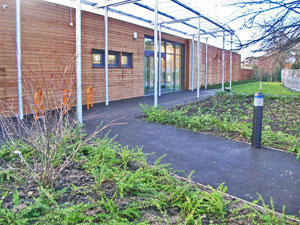
Merton Intergenerational Centre heated in winter, cooled in summer, by IHT
Interseasonal Heat Transfer is the key to sustainable building by providing solar space heating and natural cooling through one integrated design.
Low Carbon Supermarkets
IHT can balance the heating and cooling loads in new build supermarkets. It can also address the urgent question of installation as a Retrofit Plug-In to save carbon in existing supermarkets, due to the special needs and characteristics of supermarkets.
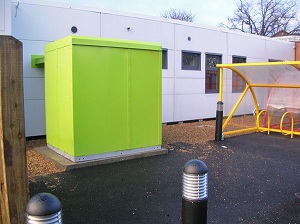
The ICAX Skid controls the flow of energy to the ground in summer, to the building in winter
ICAX are thermal energy specialists who provide renewable energy to supermarkets by providing innovative energy solutions based on recycling on-site renewable heat: heat well for less.
See Ground Source Energy | Clean Energy Cashback | Green Technologies
ICAX Projects:
Toddington | Howe Dell | Hiroshima | HMP Garth | Suffolk One | Merton | Tesco Greenfield Store | Wellington | UTP Factory | Cambridge Terrace
