


District Heating – Heat Networks – Community Heating
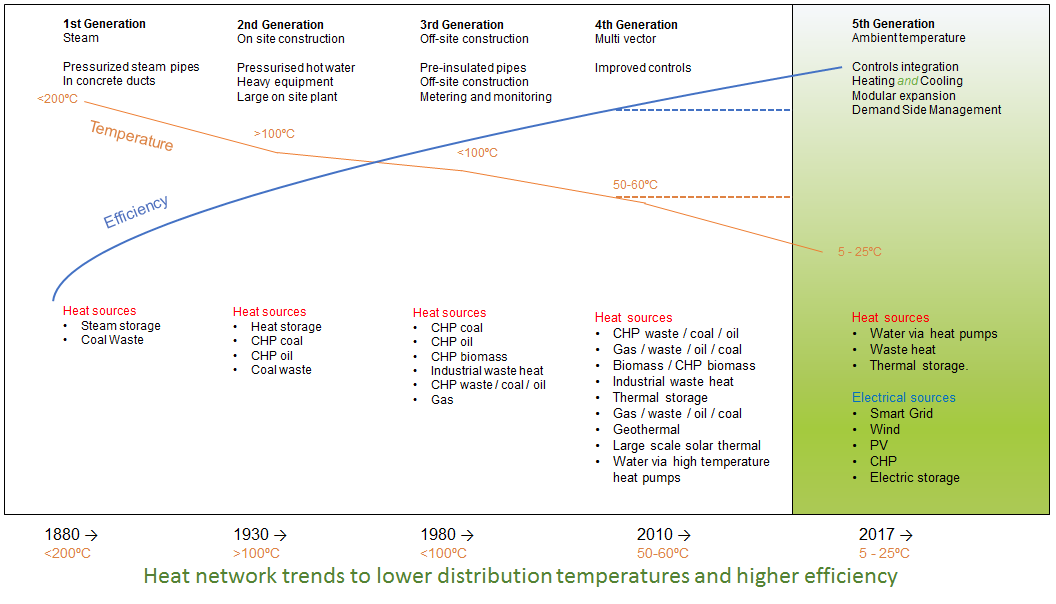
District heating is a system for distributing heat for space heating and hot water to residential and commercial properties using heat networks. District heating plants can provide higher efficiencies and lower carbon emissions than local boilers.
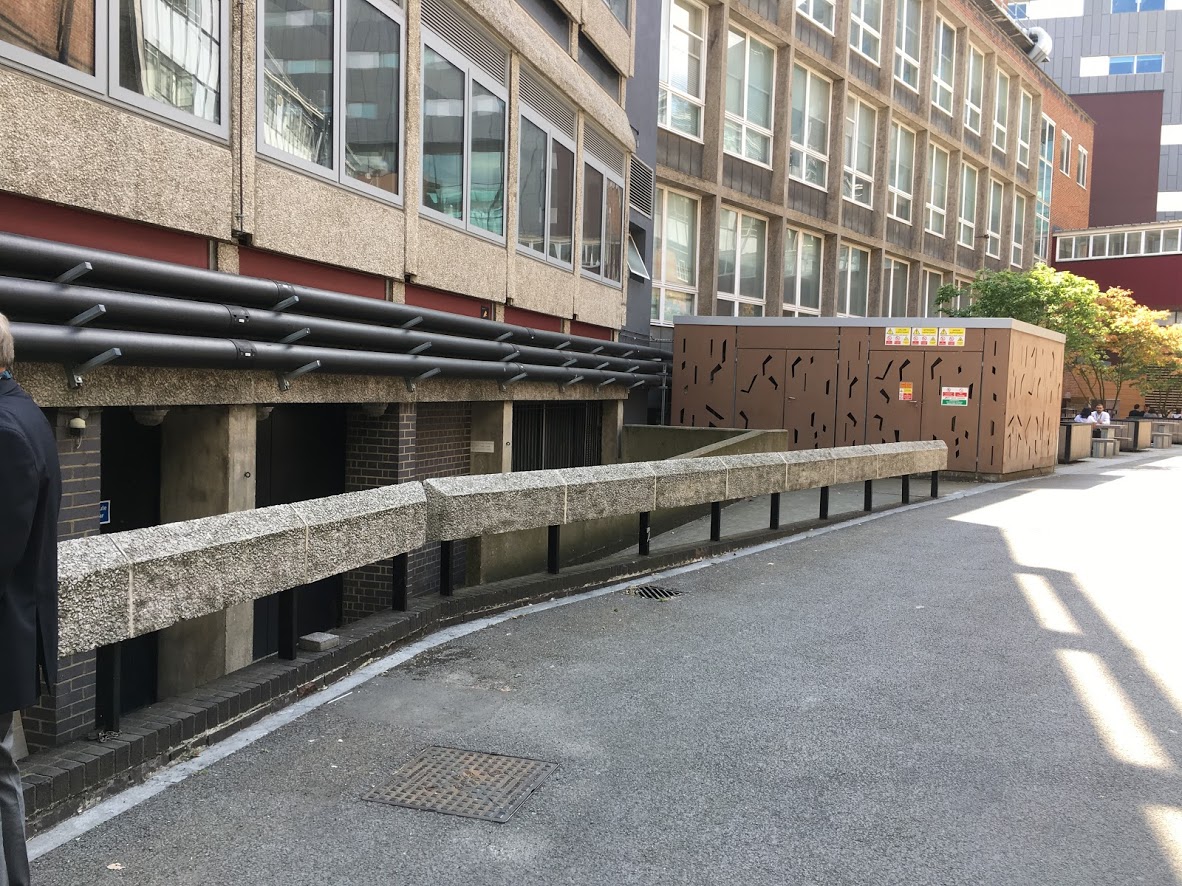
The standard approach is to employ a gas-based CHP engine to generate electricity at a central location and recycle the heat from cooling the engine to heat buildings. This may be efficient in winter when heat is required: it saves energy and reduces carbon emissions compared to a gas powered generating station which wastes heat to the atmosphere to avoid overheating.
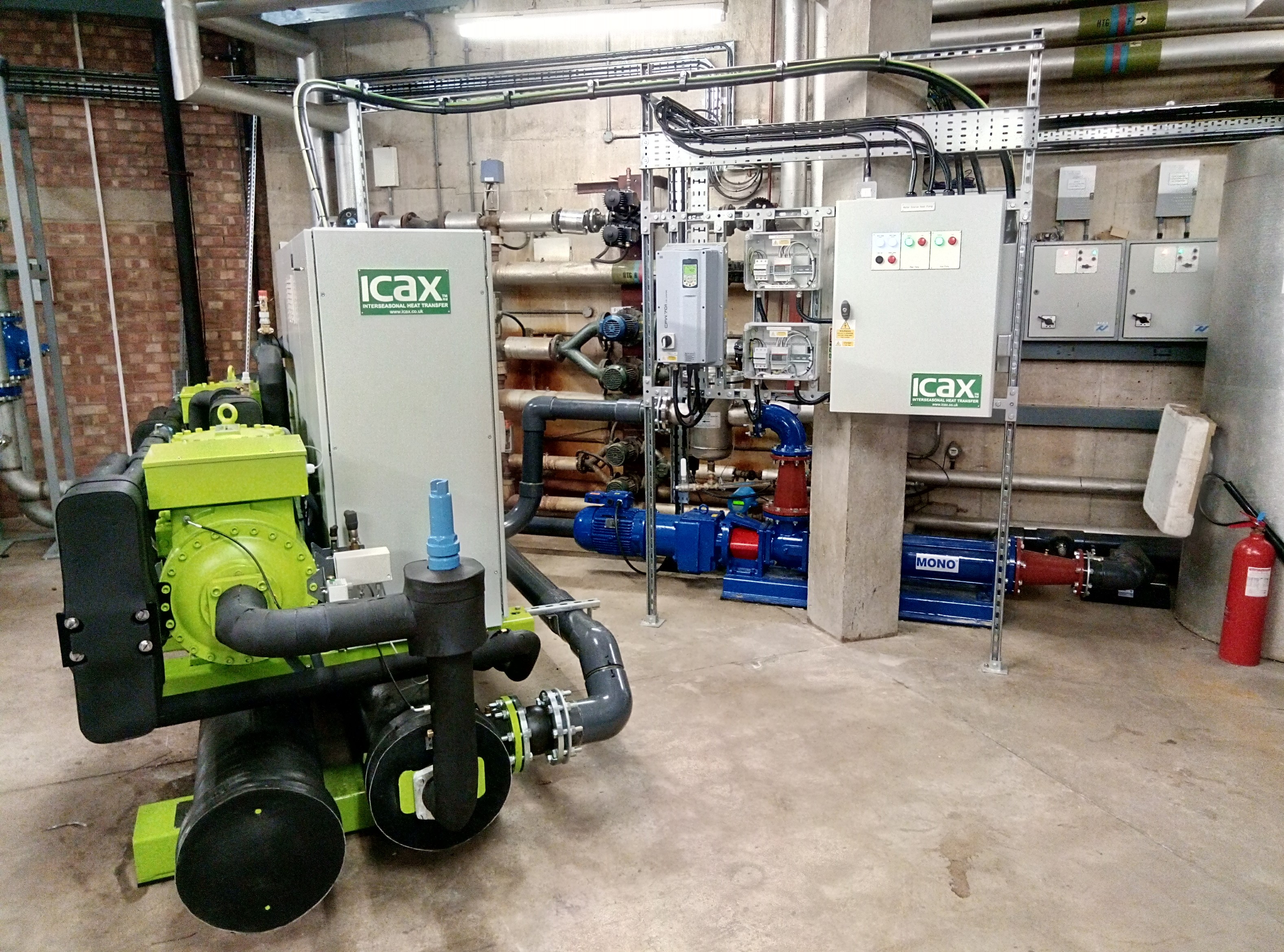
However, there is a much more effective way to reduce carbon emissions: stop using combustion altogether. Heating can be provided by heat pumps in each building which draw heat from a communal district network providing water at ambient ground temperature.
Cooling is not normally provided by a district heating network. However, cooling is a requirement for most new office buildings in the south east of England and cooling can be provided by heat pumps in each building rejecting heat to the communal district network. This is more efficient than chillers trying to waste heat into hot air – when they can more easily reject heat to a cold groundwater circuit. A further bonus is that this increases the district network temperature for those buildings which need heating.
This novel approach to district heating and cooling has many advantages for district heating. It can ensure that building groups have a reliable, independent and sustainable source of Renewable Heating and Renewable Cooling.
Heat Sharing Networks can also bring On-site Renewable Energy to district heating, instead of relying on external fossil fuel supplies commonly used in Combined Heat and Power (CHP) systems.
District Heating based on Heat Transfer and Heat Sharing Networks can ...
- provide a reliable and low-cost green energy source for space heating and cooling
- save over 75% on carbon emissions on heating compared to emissions from gas boilers
- save over 85% on carbon emissions on cooling buildings compared to emissions (from the power stations) that power electric air conditioning and electric chillers
- save 100% on carbon emissions on heating and cooling when the grid is decarbonised
- provide a low-cost heat energy (or cooling) source for industrial processes
- provide opportunities for reducing carbon emissions by re-cycling solar energy instead of burning fossil fuels
- provide the opportunity to recover heat from buildings with high occupancy and high passive heat gains and transfer it to buildings needing heat
- attract Renewable Heat Incentive for use of ground source heat pumps
- attract Renewable Heat Incentive for use of solar thermal collectors
- improve urban air quality by avoiding combustion of fossil fuels or biomass in densely populated areas
Groups of Buildings
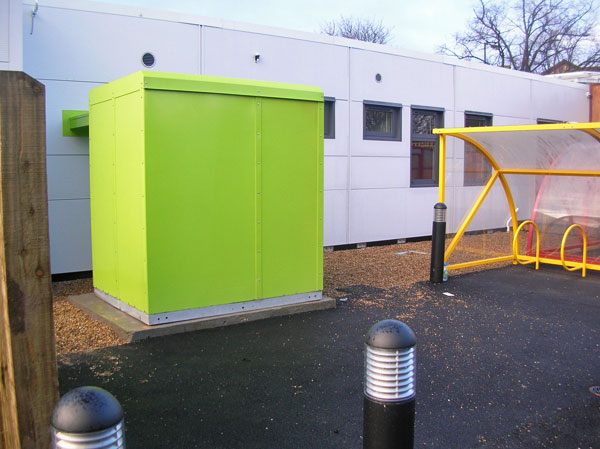
A Heat Sharing Network is very well suited to providing District Heating to groups of houses. The cost of providing an efficient installation can be shared across a number of houses, and the benefits increase if the district heating system includes other buildings such as schools or offices whose heating and cooling requirements may follow a different daily pattern (and different weekly pattern) from the heating demand for houses. Where the district covers offices, or data centres, the heat recovered from cooling these buildings can be transferred to homes requiring heating (or other buildings with a heating need such as a community swimming pool). Where the cooling demand is separated in time from the heating demand, surplus heat can be stored in ThermalBanks from the time it is available to the time it is needed. This efficient use of heat is at the heart of Interseasonal Heat Transfer and enables ICAX to provide cheaper heating and cheaper cooling than conventional methods, as well as proving heating and cooling with a very low carbon footprint.
Sharing heat between buildings
Many buildings have an overall cooling load over the year: they have a requirement to disperse heat. This often applies to modern office buildings in south east England with extensive glazing and high solar gains. These buildings may be adjacent to older buildings with an overall annual heating load. ICAX has developed systems to allow for the transfer of heat between buildings: this form of heat transfer can save fuel and carbon emissions for both buildings on a "Heat Sharing Network".
Both buildings can benefit from a heat sharing dividend when they enjoy joined-up heating and cooling.
Other buildings with a need to loose excess heat include underground train tunnels, data centres and supermarkets.
District Energy Management System
ICAX has developed a District Energy Management System ("EMS") to control the transfer of thermal energy from the times and places it is most cheaply available to the times and places where it is most needed. This involves control of Thermal Energy Storage to maximise the benefits, minimise costs and minimise carbon emissions.
Even in a group of similar houses there will be variations in the heating requirements between houses: some houses will be unoccupied during the working day, others with small children, or pensioners, may have higher heating loads during the day. IHT can meet these variations in demand successfully – and meter the use of heating in different buildings.
The combined benefits make Interseasonal Heat Transfer an attractive option for offices, schools and universities, hospitals, community centres, urban and suburban housing developments, industrial developments and private houses aiming for low energy use based on solar power.
Energy Hub – sharing warmth feels good
District Heating using Interseasonal Heat Transfer combines the benefits of on-site renewable energy with sharing heating loads between neighbours.
See Energy Hub European District Heating Project which uses energy generation within the built environment and heat networks in its quest to achieve zero energy districts.
Solar Powered District Heating
ICAX is a partner in the CHOICES Project which uses solar electricity to power air source heat pumps to store summer heat in Thermal banks. Heat is retrieved in winter and concentrated before being distributed on a district heating circuit to community buildings to provide low carbon heating.
Balanced Energy Networks
ICAX is the lead partner in the BEN Project which has constructed a retrofit Heat Sharing Network at the London South Bank University in central London based on having a heat pump in each building to provide heating or cooling from a communal Thermal Bank.
Shoreham Harbour Heat Network
ICAX is a partner in the Smart Hubs project which is building a district heat network in Shoreham Harbour based on marine source heat pumps provided by ICAX. The Smart Hubs project is also establishing a Virtual Power Plant in West Sussex to help balance supply and demand for electricity in the local smart grid.
Community Heating in Southwark
The London Borough of Southwark is decarbonising three of its housing estates by installing ICAX water source heat pumps in its plantrooms: Southwark community heating housing estates.
The five high temperature heat pumps installed in three plant rooms will draw heat from the London Chalk Aquifer to provide heating via Fourth Generation district heat networks in conjunction with the gas-fired boilers which are currently being used. The existing heat distribution systems within the estates will not need to be refurbished.
Two of the three estates are projected to save well over 25,000 tons of CO2 over the first 25 years of use, and the third is predicted to save 16,240 tons.
See Ground Source Heating See Ground Source Cooling See Ground Source Energy
See also Heat Networks Investment Project
